VOLUME 4
-
LINE PROCEDURES Frequency
920. Employees shall use this frequency to communicate to other members of the Traffic Division for day-to-day operations and activities. All members of the Traffic Division are expected to tune a free frequency slot on their department issued radio to this frequency.
102. Phonetic Alphabet The Traffic Division and the Department utilizes the Association of Public-Safety Communications Officials (APCO) word list (or the "LSPD Phonetic Alphabet"). The following code words shall be used, when applicable, in local radio transmissions:
SPACER
| Letter | Phonetic | | Letter | Phonetic |
| A | Adam | | N | Nora |
| B | Boy | | O | Ocean |
| C | Charles | | P | Paul |
| D | David | | Q | Queen |
| E | Edward | | R | Robert |
| F | Frank | | S | Sam |
| G | George | | T | Tom |
| H | Henry | | U | Union |
| I | Ida | | V | Victor |
| J | John | | W | William |
| K | King | | X | X-ray |
| L | Lincoln | | Y | Young |
| M | Mary | | Z | Zebra |
SPACER
103. Cellphone Usage. Employees shall possess a Cellphone for City-related business, and it is prohibited to be used for personal calls except for urgent personal business. Employees shall ensure that their City-related Cellphone number is listed on their MDC profile. Using a cell phone while driving a motor vehicle is prohibited unless for urgent circumstances where the safety of the officer or a third party is at risk.
201. Traffic Enforcement Objective. The traffic enforcement objective of the Department and Traffic Division is to reduce traffic collisions and injuries and to facilitate the safe and expeditious flow of vehicular and pedestrian traffic through the public's voluntary compliance with traffic regulations. The Department will take enforcement action upon the detection of an illegal and potentially hazardous act without regard for such factors as attitude, intent, or frivolous excuse. Enforcement action may consist of a warning, citation, license suspension, vehicle impound, or physical arrest with the goal of influencing driver behavior and reducing the likelihood of recurring violations.
The traffic division has a wide variety of vehicles available for use during different types of traffic enforcement. Each patrol type and vehicle choice serves a specific purpose which requires the traffic officer to determine:
- 1. The intended purpose of the patrol,
- 2. The vehicle most effective in accomplishing the outlined objective.
Traffic officers are trusted and expected to select an appropriate vehicle for the type of patrol they are deployed for. The dynamic nature of police work may require traffic officers to reevaluate their vehicle choice after a vehicle selection or patrol type has already been determined, with priority always given to marked vehicles.
202. Basic Patrol. A basic patrol utilizes marked vehicles. These vehicles are easily identifiable to the public by their police identifiers and are the most commonly used type of vehicle in the department. Marked vehicles are highly effective at deterring criminal activity due to their highly visible profile. The presence of marked vehicles in an area sends a powerful message to the public and criminal elements alike that law enforcement is actively operating in a specific area.
The department prioritizes the presence of marked vehicles during patrol due to the crime patterns in the State of San Andreas. Marked vehicles provide law-abiding citizens with peace of mind due to their visible nature. In most cases, potential violators immediately cease or correct behaviour in response to observing marked police vehicles. These actions, in the absence of marked police vehicles, generally continue once out of sight of law enforcement, limiting the effectiveness of marked vehicle patrol for traffic enforcement purposes. The usage of marked vehicles is expected and required for patrols where responses to situations and calls for service become the primary function of the unit, namely calls for service or backup requests unrelated to traffic enforcement. The usage of marked vehicles continues to have merits during patrols where traffic enforcement or responding to related calls is the primary function of the unit due to the visibility of the vehicle.
203. Targeted Enforcement Patrol. These patrols do not have specific layouts that must be followed but should meet a series of requirements. These requirements are the following:
- Must be targetting a specific type of traffic offence.
- Must be targeting a specific area.
- Must last for no less than sixty (60) minutes.
- Must not require forms of roadblocks to be conducted.
- Only one (1) Traffic Enforcement Patrol can be documented for each officer for every twenty four (24) hour period.
There are a number of different types of targeted enforcement patrols which can be conducted by Traffic and Motor Officers.
- 203/1. Mobile Speed Enforcement
Use the vehicle-mounted radar system to patrol around specific areas and monitor the speeds of vehicles as well as ensuring there are no illegal vehicle contests being conducted.
- 203/2. Stationary Speed Enforcement
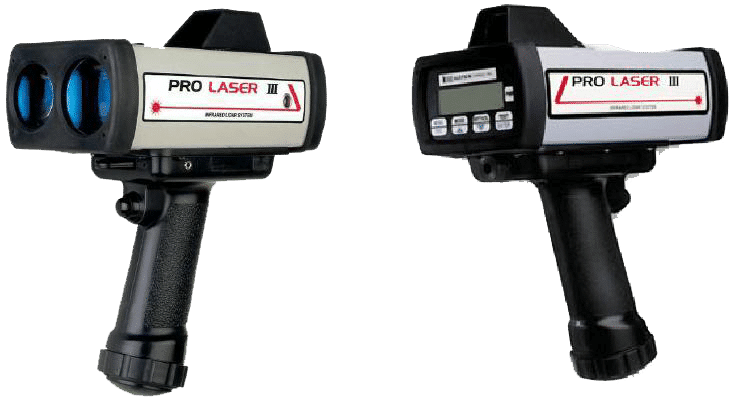
Park in a specific area and use the LIDAR gun or the vehicle-mounted radar system to monitor the speeds of vehicles as well as ensure there are no illegal vehicle contests being conducted.
- 203/3. Parking Enforcement
Target high population and commercial areas to check vehicle parking around a specific area. Officers are able to utilize their patrol vehicles or walk around an area. Camera evidence of illegal parking must be acquired before citations are issued. Infractions can be issued using either the MDC or a Traffic Citation Book but must be fixed prominently and securely to the vehicle. Officers may wish to deploy a tow truck in conjunction with another officer to remove any vehicles as per the Parking Definitions Act of 2021.
- 203/4. Registration Violation Enforcement
Target high population areas and check insurance on vehicles around the area. The car-mounted ALPR system can be utilized where appropriate, but officers will are may also exit their vehicle to manually take notes of license plates of parked vehicles to either check on the MDC or to radio in using Code 10. Camera evidence of illegal parking must be acquired before citations are issued. Dashboard camera footage is recommended when issuing citations following a traffic stop. Infractions can be issued using either the MDC or a Traffic Citation Book and must either be fixed prominently and securely to the vehicle or issued directly to the driver.
- 203/5. Moving Violation Enforcement
Target a specific area in which to monitor driving standards. Officers may wish to focus on a specific type of infraction such as Failing to Yield to a Traffic Control Device, Failure to use Safety Equipment or Illegal Tints, but are expected to respond to more grievous issues such as Negligent Operation of a Vehicle or Reckless Driving.
- 203/6. Commercial Enforcement
Similar to Moving Violation Enforcement, target a specific commercial area in which to monitor driving standards. Officers may wish to focus on a specific type of infraction such as Failing to Yield to a Traffic Control Device, Vehicular Noise Violation or Speeding, but are expected to respond to more grievous issues such as Negligent Operation of a Vehicle or Reckless Driving. For officer safety, heavy-duty vehicles such as the Alamo and Caracara are recommended for this type of enforcement as these types of vehicles are more suitable as lead units in pursuits in the event of counter-manoeuvres by suspects this type of suspect.
204. Caracara Usage Policy.
The marked Caracara is considered a utility vehicle with expanded storage space for equipment and is restricted only for use during operations and targeted enforcement focusing on commercial vehicles. Officers are to use discretion as to whether they deem it necessary to join pursuits. If the TAC Supervisor deems it unnecessary then the Supervisor may pull the Caracara from the pursuit
The marked Caracara can only be deployed for the following reasons:
- Targeted Commerical Enforcement
- When a Supervisor requests a road closure.
- During group operations with the permission of a Senior Traffic Officer or Supervisor.
The unmarked Caracara counts as an unmarked vehicle. Refer to 205. Unmarked Vehicle Policy.
205. Unmarked Vehicle Policy.
In order to take out an unmarked vehicle, officers must ensure two unmarked vehicles are not already being utilized. Only one (1) unmarked vehicle can only be deployed for every two(2)
basic units & One (1)
traffic units on patrol and only two (2) unmarked units can be deployed at any time.
((When taking out an unmarked vehicle,
must be placed behind both the callsign in the /pcad system and the officer's name in TeamSpeak.))
Unmarked vehicles can be deployed during Small Group Operations, with the permission of a Senior Traffic Officer or Supervisor.
Large Group Operations do not require unmarked permission to meet these requirements as the officer in charge of operations has full control over the vehicle fleet for the operation.
Only Traffic Officers and above can deploy or drive unmarked vehicles during patrols. Probationary Traffic Officers may utilize unmarked vehicles during Large Group Operations with the permission of the Operation Commander. Officers from outside the Traffic Division are not authorized to drive unmarked vehicles at any time.
Unmarked vehicles can only be deployed for the following reasons:
- Targeted Enforcement Patrols
- During Small Group Operations with the permission of a Senior Traffic Officer or Supervisor.
- During Large Group Operations, as the Operation Commander has full use of the vehicle fleet.
206. Police Utility Vehicle Policy
Traffic Division is equipped with two Police Utility Vehicles which may be deployed as necessary for a variety of traffic enforcement activities. Both Police Utility vehicles are specifically outfitted with expanded storage space for equipment. Officers are to use discretion as to whether they deem it necessary to utilize a Police Utility Vehicle.
Police Utility Vehicles:
- Vapid Sadler Police Utility
- Vapid Speedo Express
Police Utility Vehicles can only be deployed for the following reasons:
- During group operations with the permission of a Senior Traffic Officer or Supervisor
- Traffic Collision Investigations
- Traffic Control at sanctioned events
Deployments of Police Utility Vehicles will be monitored by Traffic Supervisory. Any instances of misuse may lead to disciplinary action.
301. Traffic Stops - Objective. The objective of a traffic stop is to mainly educate the violator. Education is our greatest tool to ensure safe driving standards. Traffic Officers are expected to always ensure that the violator, in great detail, understands how the violation was committed and what the proper action should be ensure that corrective measures are taken by the violator, if appropriate.
302. Traffic Stops - Factors. Officers should use discretion in determining whether a citation, verbal warning, application for complaint or written warning is most appropriate. Factors to consider are:
- The likelihood of education being effective;
- The likelihood a warning would be effective;
- The severity of the traffic violation;
- The observance of multiple traffic violations;
- Chronic violations occurring at the location; and,
- The license status of the violator (number of warnings, etc).
303. Traffic Stops - Procedure Traffic stops shall be initiated, as soon as practicable, after a traffic violation is observed by an Officer. The Officer shall signal the vehicle to pull over on the right side of the road using their lights and sirens. The PA system, commonly referred to as "megaphone" shall only be used as a last resort but is not mandatory to be used. Traffic stops must not be performed on or in:
- Bottom-end of hills
- Bridges
- Highly populated areas (e.g in front of Mirror Park Plaza, etc)
- Intersections
- Poorly lit areas
- Tunnels
The Officer may use the Automatic License Plate Recognition (ALPR) or Mobile Data Computer (MDC) to retrieve data regarding the vehicle's registration. The registered owner's information shall be obtained after to reporting the traffic stop over the BASE frequency. The Officer may touch the rear light or the trunk of the vehicle, with the intent to leave their fingerprint/DNA on the vehicle. This is done for officer safety and in cases where verifying that the officer came in contact with a specific vehicle is required. The Officer shall ensure the trunk of the vehicle is properly closed prior to approaching the driver.
The Officer shall maintain a professional attitude at all times regardless of the attitude or offense of the traffic violator. After opening dialogue with the traffic violator, the Officer shall ask for the relevant documents. Upon obtaining the documents, the Officer shall return to their patrol vehicle and ensure all information is correct. If the Officer wishes to write a citation, they shall do so at this point of the stop if no further questions have risen up, if so the Officer may return to the driver and ask further questions before writing the citation. When the decision to educate, warn, cite or arrest has been made, the Officer shall return to the vehicle and politely explain the reason for the stop, as well as the enforcement action that will be taken.
401. Initiation of a Pursuit. When a unit goes in pursuit, it shall advise such over the main radio frequency and give the unit's identification (callsign), location, a description of the pursued vehicle and/or suspects, directions taken, reason for pursuit, request for an air unit and a Supervisor, and the applicable TAC channel.
Any attending unit having pertinent information regarding the pursuit may advise so over the appropriate Local TAC (L-TAC) channel and reference that the information is in regards to the respective Citywide TAC channel the pursuit is ongoing in. (Example: "2T13, the vehicle in TAC-1 is also wanted for an attempted robbery from a previous call for service.")
Once a Supervisor joins a pursuit, he shall respond immediately and upon arrival in the TAC channel, declare themselves as Incident Commander via broadcast over the BASE frequency. In the event that more than one Supervisor are attending the pursuit, the most senior Supervisor (by rank, and if same rank, by seniority in rank) shall assume Incident Commander. As Incident Commander, he shall be responsible for the management and control of the pursuit and post incident management.
402. Pursuit Responsibilities. Initiating Unit. The responsibility of the officers in the initiating unit is the apprehension of the suspect without unreasonably endangering themselves or others. The pursuing unit shall give frequent and comprehensive progress reports on the pursued subject's location.
In the event that an initiating unit is in an unmarked patrol unit, or an officer on a motorcycle he shall allow marked patrol units to take lead when reasonable and position themselves at the end of the pursuit line. Covert units without emergency equipment shall not engage in a pursuit unless exigent circumstances require a pursuit to take place. In those rare instances, it shall be necessary to follow a suspect vehicle while summoning assistance from a four-wheeled unit equipped with external emergency lights.
Secondary Units. The secondary units shall be responsible for backing up the Initiating Unit and broadcasting pertinent information if necessary.
Incident Commander. The Incident Commander shall monitor the pursuit and continuously assess the situation and ensure that the pursuit is conducted within Department guidelines. If necessary, the Supervisor shall direct specific units out of the pursuit, reassign the primary or secondary units, assign an available air unit, terminate the pursuit, or determine the necessity of employing a VIT. Code Three vehicle operation is authorized for the supervisor, at the supervisor's discretion, to properly monitor and direct the pursuit.
Air Support. The use of an air unit to track a suspect (or suspect vehicle) is a valuable law enforcement tool intended to enhance public and officer safety by encouraging a fleeing suspect(s) to operate his vehicle responsibly and/or terminate the pursuit. Airships shall be utilized in all pursuits, if available. To assist in controlling the pursuit, the air unit shall:
- Assume pursuit broadcast responsibilities, thus relieving the Initiating Unit, if visual contact is maintained.
- Advise the Incident Commander regarding suspect actions and applicable tactical considerations (e.g. opportunity for interceptions, recommending to terminate the pursuit, etc.).
- Respond, as practicable, to any other requests from the Incident Commander.
403. Vehicle Intervention Techniques. Officers shall obtain approval from a supervisor prior to deploying a Vehicle Intervention Technique (VIT), unless exigent circumstances exist that require immediate action and preclude officers from seeking prior supervisor approval.
A VIT may be deployed when the officer believes that the continued movement of the pursued vehicle would place persons in imminent danger of great bodily harm or death and/or the risk of harm to persons outweighs any risks created by the application of a VIT. The decision to deploy a VIT shall be based on careful consideration of the situation, while maintaining a significant regard for public and officer safety. Currently, the Department has authorized the following:
Tire Deflation Devices. A Tire Deflation Device (TDD), commonly referred to as a "Spike Strip" is used to impede or stop the movement of vehicles by deflating the tires. Absent exigent circumstances, the TDD should generally not be used in adverse terrain or where geographic configurations increase the risk of injury to the suspect (e.g., on roadways bounded by steep descending embankments, curves), or at any location where safety of proceeding or opposing traffic cannot be assured. Absent of exigent circumstances, officers shall not use a TDD on two or three wheeled vehicles.
Pursuit Intervention Technique. The Pursuit Intervention Technique (PIT) is designed to be executed by a pursuing police vehicle. The PIT is a technique in which the officer's vehicle makes contact with the rear quarter panel of the suspect's vehicle, causing it to rotate and come to a stop. If the technique is properly executed, damage to the officer's vehicle should be minor or negligible. The location chosen to implement a PIT is of paramount importance. The area should be clear of pedestrians and other occupied vehicles, and road conditions should be in good condition (e.g., free from loose gravel, significant road repair). Unless exigent circumstances exist, the PIT should not be attempted when the following exists:
- The size of the pursued vehicle is significantly heavier than the initiating unit's police vehicle (e.g., buses, motor homes, semi-trucks, dual-rear-wheel pickup trucks).
- Vehicles with a higher center of gravity.
- The pursued vehicle is transporting hazardous material.
- A suspect who is known to be armed.
- The pursued vehicle is a motorcycle, motor scooter or three-wheeled cycle.
Other tactics employed to stop a pursued suspect, such as establishing a physical barricade (road block), boxing in, heading off, ramming, or driving alongside the pursued vehicle are strongly discouraged. These tactics are extremely hazardous and should only be considered in those rare instances when warranted to save a life, and then only as a last resort, only with the Incident Commander's explicit authorization. In all circumstances where subjects are known to be armed, boxing in shall be prohibited.
404. Termination of a Pursuit. Officers involved in a pursuit shall continually evaluate the necessity for continuing the pursuit. Officers must determine whether the seriousness of the initial violation or any subsequent violations reasonably warrants continuance of the pursuit. The following factors should be considered when evaluating speeds throughout a pursuit and assessing whether to continue or terminate a pursuit:
- Whether there is an unreasonable risk of injury to the public's safety, the pursuing officers' safety or the safety of the occupant(s) in the fleeing vehicle.
- Whether speeds dangerously exceed the normal flow of traffic, or otherwise constitute a public safety concern.
- Whether the suspects can be apprehended at a later time.
- If the weather conditions such as rain, fog, snow, etc., create an unreasonable risk of injury to the public or the pursuing officers.
- The seriousness of the crime and its relationship to overall safety.
- The availability of an air unit.
- The loss of the pursued suspect, or unknown location of the pursued suspect.
- A prolonged pursuit of a suspect based only on an infraction, evading a peace officer, or reckless driving.
501. Motor Vehicle Accidents. Traffic Officers must make it a priority to respond to motor vehicle accidents (MVAs) when a nine-one-one call is made, or if requested by another unit.
A Full Traffic Collision Report (TCI) must be filed if the MVA:
A Short Traffic Collision Report (TCI) may be filed if the MVA:
- resulted in severe bodily injury,
- resulted in severe property damage
A copy of the report must be made accessibly in the Collision Reports section and also the shared board
here.
502. Officer-Involved Motor Vehicle Accidents. Traffic Officers must respond to motor vehicle accidents (MVAs) involving departmental personnel and file a Full Traffic Collision Report (TCI) accordingly. The collision report must be filed to document the situation and a copy of the report must be made accessibly in both the Collision Reports section
here and also the shared Officer Involved TCI section of the board
here.
503. Traffic Collision Investigations. All Traffic Officers and above are expected to conduct and document traffic collision reports. The manual for Traffic Collision Reports can be found
here.
- 503/1. Senior Traffic Collision Investigator Ribbon. Once an officer has completed five (5) Full Traffic Collision Reports they can an request assessment for the Senior Traffic Collision Investigator ribbon here.
Senior Traffic Collision Investigator.
This qualification is given upon becoming a qualified Senior Traffic Collision Investigator.
STANDARDIZED FIELD SOBRIETY TEST
There are many drivers in San Andreas that drive under influence of alcohol or drugs. Officers work hard every day to ensure that everyone abides the law. The purpose of a Standardized Field Sobriety Test is to allow officers an effective means of testing those drivers they believe to be driving under the influence. These tests can be performed by any officer within the Los Santos Police Department.
602. Standardized Field Sobriety Test Procedure. Upon suspicion that a driver is under the influence, the following procedure should be followed:
- 1. Ask the driver to step out of the vehicle and make their way over to the sidewalk.
2. Perform any number of the tests below until you are convinced of the suspect's innocence or guilt.
3. If drugs are suspected call a Narcotics K9 Unit.
4. Release the suspect or contact a Drug Recognition Expert to make an arrest.
602/1. Roadside Eye Test. Officers will ask them to read a number plate from 20 meters (66ft), around five car lengths.
602/2. Pupillary Examination. The presence of some drugs can cause the pupils to dilate and others cause the pupils to constrict. A simple gauge is used to compare the size of the subject’s pupils and to detect any reading outside the normal range of pupil size of 3.0mm to 6.5mm.
602/3. Horizontal Gaze Nystagmus Test This test asks the suspect to follow a moving object with their eyes. The testing peace officer may use a finger, pen or flashlight. The testing officer looks for "jerking" of the eyeball which happens to everyone when the eyes are rotated at high peripheral angles. When intoxicated, the jerking of the eyes becomes more exaggerated and occurs at lesser angles.
602/4. Finger to Nose Test. This is a test of coordination and depth perception. The subject is asked to tilt their head backwards and, with their eyes closed, touch the tip of their nose with the tip of the index finger of a nominated hand. Certain drugs may cause the subject to misjudge the position of their nose.
602/5. Romberg Balance Test. This test is used to evaluate the subject’s internal body clock and ability to balance. The subject is asked to tilt their head backwards and, with their eyes closed, estimate the passage of 30 seconds. Certain drugs can cause the internal clock to speed up or slow down and can also cause the subject to sway back and forth or side to side.
602/6. One Leg Stand Test. This test is also a divided attention test where the subject is given specific instructions and has to stand on alternate feet, with one leg slightly raised, for a timed period of 30 seconds. During this period the subject also has to count aloud. Certain drugs can impair a person’s ability to balance, to follow the instructions and may cause them to count rapidly and/ or lose count.
602/7. Walk-And-Turn Test. This test is an exercise that enables assessment of whether a person is able to divide attention between walking, balancing and processing instructions. Before the test begins the subject is given a number of specific instructions and then has to take nine ‘heel to toe’ steps in one direction, turn and repeat the process in the opposite direction, counting each step aloud. Certain drugs can impair a person’s ability to balance and to remember and process the information provided.
603. Testing Equipment. The division is issued a range of useful equipment to help facilitate testing.
603/1. Breathalyzer Policy A breathalyzer test may only performed with consent from the suspect, or after an arrest has been made.
603/2. Narcotics Kit. The Narcotics Kit contains the following equipment:
- Pupillometer: a small, approximately 3 inch by 5 inch card (approximately 7 to 12 cm), that is usually plastic, that displays dark circles ranging in half-millimeter gradations from 1.0 millimeters to 9.0 millimeters.
- Sphygmomanometer: a manual, aneroid blood pressure cuff consisting of a pumping bulb, a screw valve, an analog gauge, and a bladder.
- Stethoscope: single or double diaphragm, double tubed.
- Thermometer: oral, digital, with disposable covers.
- Penlight: low power, medical style.
- Magnifying light: generally five to ten magnification power, similar to those used by stamp collectors and model builders.
- Pen or Pencil: used as a stylus to conduct eye movement examinations.
- Evidence containers: for blood or urine.
- Protective gloves, latex and/or rubber.
 LOS SANTOS POLICE DEPARTMENT
Traffic Division
TRAFFIC DIVISON MANUAL
LOS SANTOS POLICE DEPARTMENT
Traffic Division
TRAFFIC DIVISON MANUAL
spacer
VOLUME 4
-
LINE PROCEDURES Frequency
920. Employees shall use this frequency to communicate to other members of the Traffic Division for day-to-day operations and activities. All members of the Traffic Division are expected to tune a free frequency slot on their department issued radio to this frequency.
102. Phonetic Alphabet The Traffic Division and the Department utilizes the Association of Public-Safety Communications Officials (APCO) word list (or the "LSPD Phonetic Alphabet"). The following code words shall be used, when applicable, in local radio transmissions:
SPACER
| Letter | Phonetic | | Letter | Phonetic |
| A | Adam | | N | Nora |
| B | Boy | | O | Ocean |
| C | Charles | | P | Paul |
| D | David | | Q | Queen |
| E | Edward | | R | Robert |
| F | Frank | | S | Sam |
| G | George | | T | Tom |
| H | Henry | | U | Union |
| I | Ida | | V | Victor |
| J | John | | W | William |
| K | King | | X | X-ray |
| L | Lincoln | | Y | Young |
| M | Mary | | Z | Zebra |
SPACER
103. Cellphone Usage. Employees shall possess a Cellphone for City-related business, and it is prohibited to be used for personal calls except for urgent personal business. Employees shall ensure that their City-related Cellphone number is listed on their MDC profile. Using a cell phone while driving a motor vehicle is prohibited unless for urgent circumstances where the safety of the officer or a third party is at risk.
201. Traffic Enforcement Objective. The traffic enforcement objective of the Department and Traffic Division is to reduce traffic collisions and injuries and to facilitate the safe and expeditious flow of vehicular and pedestrian traffic through the public's voluntary compliance with traffic regulations. The Department will take enforcement action upon the detection of an illegal and potentially hazardous act without regard for such factors as attitude, intent, or frivolous excuse. Enforcement action may consist of a warning, citation, license suspension, vehicle impound, or physical arrest with the goal of influencing driver behavior and reducing the likelihood of recurring violations.
The traffic division has a wide variety of vehicles available for use during different types of traffic enforcement. Each patrol type and vehicle choice serves a specific purpose which requires the traffic officer to determine:
- 1. The intended purpose of the patrol,
- 2. The vehicle most effective in accomplishing the outlined objective.
Traffic officers are trusted and expected to select an appropriate vehicle for the type of patrol they are deployed for. The dynamic nature of police work may require traffic officers to reevaluate their vehicle choice after a vehicle selection or patrol type has already been determined, with priority always given to marked vehicles.
202. Basic Patrol. A basic patrol utilizes marked vehicles. These vehicles are easily identifiable to the public by their police identifiers and are the most commonly used type of vehicle in the department. Marked vehicles are highly effective at deterring criminal activity due to their highly visible profile. The presence of marked vehicles in an area sends a powerful message to the public and criminal elements alike that law enforcement is actively operating in a specific area.
The department prioritizes the presence of marked vehicles during patrol due to the crime patterns in the State of San Andreas. Marked vehicles provide law-abiding citizens with peace of mind due to their visible nature. In most cases, potential violators immediately cease or correct behaviour in response to observing marked police vehicles. These actions, in the absence of marked police vehicles, generally continue once out of sight of law enforcement, limiting the effectiveness of marked vehicle patrol for traffic enforcement purposes. The usage of marked vehicles is expected and required for patrols where responses to situations and calls for service become the primary function of the unit, namely calls for service or backup requests unrelated to traffic enforcement. The usage of marked vehicles continues to have merits during patrols where traffic enforcement or responding to related calls is the primary function of the unit due to the visibility of the vehicle.
203. Targeted Enforcement Patrol. These patrols do not have specific layouts that must be followed but should meet a series of requirements. These requirements are the following:
- Must be targetting a specific type of traffic offence.
- Must be targeting a specific area.
- Must last for no less than sixty (60) minutes.
- Must not require forms of roadblocks to be conducted.
- Only one (1) Traffic Enforcement Patrol can be documented for each officer for every twenty four (24) hour period.
There are a number of different types of targeted enforcement patrols which can be conducted by Traffic and Motor Officers.
- 203/1. Mobile Speed Enforcement
Use the vehicle-mounted radar system to patrol around specific areas and monitor the speeds of vehicles as well as ensuring there are no illegal vehicle contests being conducted.
- 203/2. Stationary Speed Enforcement
Park in a specific area and use the LIDAR gun or the vehicle-mounted radar system to monitor the speeds of vehicles as well as ensure there are no illegal vehicle contests being conducted.
- 203/3. Parking Enforcement
Target high population and commercial areas to check vehicle parking around a specific area. Officers are able to utilize their patrol vehicles or walk around an area. Camera evidence of illegal parking must be acquired before citations are issued. Infractions can be issued using either the MDC or a Traffic Citation Book but must be fixed prominently and securely to the vehicle. Officers may wish to deploy a tow truck in conjunction with another officer to remove any vehicles as per the Parking Definitions Act of 2021.
- 203/4. Registration Violation Enforcement
Target high population areas and check insurance on vehicles around the area. The car-mounted ALPR system can be utilized where appropriate, but officers will are may also exit their vehicle to manually take notes of license plates of parked vehicles to either check on the MDC or to radio in using Code 10. Camera evidence of illegal parking must be acquired before citations are issued. Dashboard camera footage is recommended when issuing citations following a traffic stop. Infractions can be issued using either the MDC or a Traffic Citation Book and must either be fixed prominently and securely to the vehicle or issued directly to the driver.
- 203/5. Moving Violation Enforcement
Target a specific area in which to monitor driving standards. Officers may wish to focus on a specific type of infraction such as Failing to Yield to a Traffic Control Device, Failure to use Safety Equipment or Illegal Tints, but are expected to respond to more grievous issues such as Negligent Operation of a Vehicle or Reckless Driving.
- 203/6. Commercial Enforcement
Similar to Moving Violation Enforcement, target a specific commercial area in which to monitor driving standards. Officers may wish to focus on a specific type of infraction such as Failing to Yield to a Traffic Control Device, Vehicular Noise Violation or Speeding, but are expected to respond to more grievous issues such as Negligent Operation of a Vehicle or Reckless Driving. For officer safety, heavy-duty vehicles such as the Alamo and Caracara are recommended for this type of enforcement as these types of vehicles are more suitable as lead units in pursuits in the event of counter-manoeuvres by suspects this type of suspect.
204. Caracara Usage Policy.
The marked Caracara is considered a utility vehicle with expanded storage space for equipment and is restricted only for use during operations and targeted enforcement focusing on commercial vehicles. Officers are to use discretion as to whether they deem it necessary to join pursuits. If the TAC Supervisor deems it unnecessary then the Supervisor may pull the Caracara from the pursuit
The marked Caracara can only be deployed for the following reasons:
- Targeted Commerical Enforcement
- When a Supervisor requests a road closure.
- During group operations with the permission of a Senior Traffic Officer or Supervisor.
The unmarked Caracara counts as an unmarked vehicle. Refer to 205. Unmarked Vehicle Policy.
205. Unmarked Vehicle Policy.
In order to take out an unmarked vehicle, officers must ensure two unmarked vehicles are not already being utilized. Only one (1) unmarked vehicle can only be deployed for every two(2)
basic units & One (1)
traffic units on patrol and only two (2) unmarked units can be deployed at any time.
((When taking out an unmarked vehicle,
must be placed behind both the callsign in the /pcad system and the officer's name in TeamSpeak.))
Unmarked vehicles can be deployed during Small Group Operations, with the permission of a Senior Traffic Officer or Supervisor.
Large Group Operations do not require unmarked permission to meet these requirements as the officer in charge of operations has full control over the vehicle fleet for the operation.
Only Traffic Officers and above can deploy or drive unmarked vehicles during patrols. Probationary Traffic Officers may utilize unmarked vehicles during Large Group Operations with the permission of the Operation Commander. Officers from outside the Traffic Division are not authorized to drive unmarked vehicles at any time.
Unmarked vehicles can only be deployed for the following reasons:
- Targeted Enforcement Patrols
- During Small Group Operations with the permission of a Senior Traffic Officer or Supervisor.
- During Large Group Operations, as the Operation Commander has full use of the vehicle fleet.
206. Police Utility Vehicle Policy
Traffic Division is equipped with two Police Utility Vehicles which may be deployed as necessary for a variety of traffic enforcement activities. Both Police Utility vehicles are specifically outfitted with expanded storage space for equipment. Officers are to use discretion as to whether they deem it necessary to utilize a Police Utility Vehicle.
Police Utility Vehicles:
- Vapid Sadler Police Utility
- Vapid Speedo Express
Police Utility Vehicles can only be deployed for the following reasons:
- During group operations with the permission of a Senior Traffic Officer or Supervisor
- Traffic Collision Investigations
- Traffic Control at sanctioned events
Deployments of Police Utility Vehicles will be monitored by Traffic Supervisory. Any instances of misuse may lead to disciplinary action.
301. Traffic Stops - Objective. The objective of a traffic stop is to mainly educate the violator. Education is our greatest tool to ensure safe driving standards. Traffic Officers are expected to always ensure that the violator, in great detail, understands how the violation was committed and what the proper action should be ensure that corrective measures are taken by the violator, if appropriate.
302. Traffic Stops - Factors. Officers should use discretion in determining whether a citation, verbal warning, application for complaint or written warning is most appropriate. Factors to consider are:
- The likelihood of education being effective;
- The likelihood a warning would be effective;
- The severity of the traffic violation;
- The observance of multiple traffic violations;
- Chronic violations occurring at the location; and,
- The license status of the violator (number of warnings, etc).
303. Traffic Stops - Procedure Traffic stops shall be initiated, as soon as practicable, after a traffic violation is observed by an Officer. The Officer shall signal the vehicle to pull over on the right side of the road using their lights and sirens. The PA system, commonly referred to as "megaphone" shall only be used as a last resort but is not mandatory to be used. Traffic stops must not be performed on or in:
- Bottom-end of hills
- Bridges
- Highly populated areas (e.g in front of Mirror Park Plaza, etc)
- Intersections
- Poorly lit areas
- Tunnels
The Officer may use the Automatic License Plate Recognition (ALPR) or Mobile Data Computer (MDC) to retrieve data regarding the vehicle's registration. The registered owner's information shall be obtained after to reporting the traffic stop over the BASE frequency. The Officer may touch the rear light or the trunk of the vehicle, with the intent to leave their fingerprint/DNA on the vehicle. This is done for officer safety and in cases where verifying that the officer came in contact with a specific vehicle is required. The Officer shall ensure the trunk of the vehicle is properly closed prior to approaching the driver.
The Officer shall maintain a professional attitude at all times regardless of the attitude or offense of the traffic violator. After opening dialogue with the traffic violator, the Officer shall ask for the relevant documents. Upon obtaining the documents, the Officer shall return to their patrol vehicle and ensure all information is correct. If the Officer wishes to write a citation, they shall do so at this point of the stop if no further questions have risen up, if so the Officer may return to the driver and ask further questions before writing the citation. When the decision to educate, warn, cite or arrest has been made, the Officer shall return to the vehicle and politely explain the reason for the stop, as well as the enforcement action that will be taken.
401. Initiation of a Pursuit. When a unit goes in pursuit, it shall advise such over the main radio frequency and give the unit's identification (callsign), location, a description of the pursued vehicle and/or suspects, directions taken, reason for pursuit, request for an air unit and a Supervisor, and the applicable TAC channel.
Any attending unit having pertinent information regarding the pursuit may advise so over the appropriate Local TAC (L-TAC) channel and reference that the information is in regards to the respective Citywide TAC channel the pursuit is ongoing in. (Example: "2T13, the vehicle in TAC-1 is also wanted for an attempted robbery from a previous call for service.")
Once a Supervisor joins a pursuit, he shall respond immediately and upon arrival in the TAC channel, declare themselves as Incident Commander via broadcast over the BASE frequency. In the event that more than one Supervisor are attending the pursuit, the most senior Supervisor (by rank, and if same rank, by seniority in rank) shall assume Incident Commander. As Incident Commander, he shall be responsible for the management and control of the pursuit and post incident management.
402. Pursuit Responsibilities. Initiating Unit. The responsibility of the officers in the initiating unit is the apprehension of the suspect without unreasonably endangering themselves or others. The pursuing unit shall give frequent and comprehensive progress reports on the pursued subject's location.
In the event that an initiating unit is in an unmarked patrol unit, or an officer on a motorcycle he shall allow marked patrol units to take lead when reasonable and position themselves at the end of the pursuit line. Covert units without emergency equipment shall not engage in a pursuit unless exigent circumstances require a pursuit to take place. In those rare instances, it shall be necessary to follow a suspect vehicle while summoning assistance from a four-wheeled unit equipped with external emergency lights.
Secondary Units. The secondary units shall be responsible for backing up the Initiating Unit and broadcasting pertinent information if necessary.
Incident Commander. The Incident Commander shall monitor the pursuit and continuously assess the situation and ensure that the pursuit is conducted within Department guidelines. If necessary, the Supervisor shall direct specific units out of the pursuit, reassign the primary or secondary units, assign an available air unit, terminate the pursuit, or determine the necessity of employing a VIT. Code Three vehicle operation is authorized for the supervisor, at the supervisor's discretion, to properly monitor and direct the pursuit.
Air Support. The use of an air unit to track a suspect (or suspect vehicle) is a valuable law enforcement tool intended to enhance public and officer safety by encouraging a fleeing suspect(s) to operate his vehicle responsibly and/or terminate the pursuit. Airships shall be utilized in all pursuits, if available. To assist in controlling the pursuit, the air unit shall:
- Assume pursuit broadcast responsibilities, thus relieving the Initiating Unit, if visual contact is maintained.
- Advise the Incident Commander regarding suspect actions and applicable tactical considerations (e.g. opportunity for interceptions, recommending to terminate the pursuit, etc.).
- Respond, as practicable, to any other requests from the Incident Commander.
403. Vehicle Intervention Techniques. Officers shall obtain approval from a supervisor prior to deploying a Vehicle Intervention Technique (VIT), unless exigent circumstances exist that require immediate action and preclude officers from seeking prior supervisor approval.
A VIT may be deployed when the officer believes that the continued movement of the pursued vehicle would place persons in imminent danger of great bodily harm or death and/or the risk of harm to persons outweighs any risks created by the application of a VIT. The decision to deploy a VIT shall be based on careful consideration of the situation, while maintaining a significant regard for public and officer safety. Currently, the Department has authorized the following:
Tire Deflation Devices. A Tire Deflation Device (TDD), commonly referred to as a "Spike Strip" is used to impede or stop the movement of vehicles by deflating the tires. Absent exigent circumstances, the TDD should generally not be used in adverse terrain or where geographic configurations increase the risk of injury to the suspect (e.g., on roadways bounded by steep descending embankments, curves), or at any location where safety of proceeding or opposing traffic cannot be assured. Absent of exigent circumstances, officers shall not use a TDD on two or three wheeled vehicles.
Pursuit Intervention Technique. The Pursuit Intervention Technique (PIT) is designed to be executed by a pursuing police vehicle. The PIT is a technique in which the officer's vehicle makes contact with the rear quarter panel of the suspect's vehicle, causing it to rotate and come to a stop. If the technique is properly executed, damage to the officer's vehicle should be minor or negligible. The location chosen to implement a PIT is of paramount importance. The area should be clear of pedestrians and other occupied vehicles, and road conditions should be in good condition (e.g., free from loose gravel, significant road repair). Unless exigent circumstances exist, the PIT should not be attempted when the following exists:
- The size of the pursued vehicle is significantly heavier than the initiating unit's police vehicle (e.g., buses, motor homes, semi-trucks, dual-rear-wheel pickup trucks).
- Vehicles with a higher center of gravity.
- The pursued vehicle is transporting hazardous material.
- A suspect who is known to be armed.
- The pursued vehicle is a motorcycle, motor scooter or three-wheeled cycle.
Other tactics employed to stop a pursued suspect, such as establishing a physical barricade (road block), boxing in, heading off, ramming, or driving alongside the pursued vehicle are strongly discouraged. These tactics are extremely hazardous and should only be considered in those rare instances when warranted to save a life, and then only as a last resort, only with the Incident Commander's explicit authorization. In all circumstances where subjects are known to be armed, boxing in shall be prohibited.
404. Termination of a Pursuit. Officers involved in a pursuit shall continually evaluate the necessity for continuing the pursuit. Officers must determine whether the seriousness of the initial violation or any subsequent violations reasonably warrants continuance of the pursuit. The following factors should be considered when evaluating speeds throughout a pursuit and assessing whether to continue or terminate a pursuit:
- Whether there is an unreasonable risk of injury to the public's safety, the pursuing officers' safety or the safety of the occupant(s) in the fleeing vehicle.
- Whether speeds dangerously exceed the normal flow of traffic, or otherwise constitute a public safety concern.
- Whether the suspects can be apprehended at a later time.
- If the weather conditions such as rain, fog, snow, etc., create an unreasonable risk of injury to the public or the pursuing officers.
- The seriousness of the crime and its relationship to overall safety.
- The availability of an air unit.
- The loss of the pursued suspect, or unknown location of the pursued suspect.
- A prolonged pursuit of a suspect based only on an infraction, evading a peace officer, or reckless driving.
501. Motor Vehicle Accidents. Traffic Officers must make it a priority to respond to motor vehicle accidents (MVAs) when a nine-one-one call is made, or if requested by another unit.
A Full Traffic Collision Report (TCI) must be filed if the MVA:
A Short Traffic Collision Report (TCI) may be filed if the MVA:
- resulted in severe bodily injury,
- resulted in severe property damage
A copy of the report must be made accessibly in the Collision Reports section and also the shared board
here.
502. Officer-Involved Motor Vehicle Accidents. Traffic Officers must respond to motor vehicle accidents (MVAs) involving departmental personnel and file a Full Traffic Collision Report (TCI) accordingly. The collision report must be filed to document the situation and a copy of the report must be made accessibly in both the Collision Reports section
here and also the shared Officer Involved TCI section of the board
here.
503. Traffic Collision Investigations. All Traffic Officers and above are expected to conduct and document traffic collision reports. The manual for Traffic Collision Reports can be found
here.
- 503/1. Senior Traffic Collision Investigator Ribbon. Once an officer has completed five (5) Full Traffic Collision Reports they can an request assessment for the Senior Traffic Collision Investigator ribbon here.
Senior Traffic Collision Investigator.
This qualification is given upon becoming a qualified Senior Traffic Collision Investigator.
STANDARDIZED FIELD SOBRIETY TEST
There are many drivers in San Andreas that drive under influence of alcohol or drugs. Officers work hard every day to ensure that everyone abides the law. The purpose of a Standardized Field Sobriety Test is to allow officers an effective means of testing those drivers they believe to be driving under the influence. These tests can be performed by any officer within the Los Santos Police Department.
602. Standardized Field Sobriety Test Procedure. Upon suspicion that a driver is under the influence, the following procedure should be followed:
- 1. Ask the driver to step out of the vehicle and make their way over to the sidewalk.
2. Perform any number of the tests below until you are convinced of the suspect's innocence or guilt.
3. If drugs are suspected call a Narcotics K9 Unit.
4. Release the suspect or contact a Drug Recognition Expert to make an arrest.
602/1. Roadside Eye Test. Officers will ask them to read a number plate from 20 meters (66ft), around five car lengths.
602/2. Pupillary Examination. The presence of some drugs can cause the pupils to dilate and others cause the pupils to constrict. A simple gauge is used to compare the size of the subject’s pupils and to detect any reading outside the normal range of pupil size of 3.0mm to 6.5mm.
602/3. Horizontal Gaze Nystagmus Test This test asks the suspect to follow a moving object with their eyes. The testing peace officer may use a finger, pen or flashlight. The testing officer looks for "jerking" of the eyeball which happens to everyone when the eyes are rotated at high peripheral angles. When intoxicated, the jerking of the eyes becomes more exaggerated and occurs at lesser angles.
602/4. Finger to Nose Test. This is a test of coordination and depth perception. The subject is asked to tilt their head backwards and, with their eyes closed, touch the tip of their nose with the tip of the index finger of a nominated hand. Certain drugs may cause the subject to misjudge the position of their nose.
602/5. Romberg Balance Test. This test is used to evaluate the subject’s internal body clock and ability to balance. The subject is asked to tilt their head backwards and, with their eyes closed, estimate the passage of 30 seconds. Certain drugs can cause the internal clock to speed up or slow down and can also cause the subject to sway back and forth or side to side.
602/6. One Leg Stand Test. This test is also a divided attention test where the subject is given specific instructions and has to stand on alternate feet, with one leg slightly raised, for a timed period of 30 seconds. During this period the subject also has to count aloud. Certain drugs can impair a person’s ability to balance, to follow the instructions and may cause them to count rapidly and/ or lose count.
602/7. Walk-And-Turn Test. This test is an exercise that enables assessment of whether a person is able to divide attention between walking, balancing and processing instructions. Before the test begins the subject is given a number of specific instructions and then has to take nine ‘heel to toe’ steps in one direction, turn and repeat the process in the opposite direction, counting each step aloud. Certain drugs can impair a person’s ability to balance and to remember and process the information provided.
603. Testing Equipment. The division is issued a range of useful equipment to help facilitate testing.
603/1. Breathalyzer Policy A breathalyzer test may only performed with consent from the suspect, or after an arrest has been made.
603/2. Narcotics Kit. The Narcotics Kit contains the following equipment:
- Pupillometer: a small, approximately 3 inch by 5 inch card (approximately 7 to 12 cm), that is usually plastic, that displays dark circles ranging in half-millimeter gradations from 1.0 millimeters to 9.0 millimeters.
- Sphygmomanometer: a manual, aneroid blood pressure cuff consisting of a pumping bulb, a screw valve, an analog gauge, and a bladder.
- Stethoscope: single or double diaphragm, double tubed.
- Thermometer: oral, digital, with disposable covers.
- Penlight: low power, medical style.
- Magnifying light: generally five to ten magnification power, similar to those used by stamp collectors and model builders.
- Pen or Pencil: used as a stylus to conduct eye movement examinations.
- Evidence containers: for blood or urine.
- Protective gloves, latex and/or rubber.




 LOS SANTOS POLICE DEPARTMENT